Living Environment
Apartment, compound, family home or working environment all influence space, noise tolerance, exercise options and management needs.
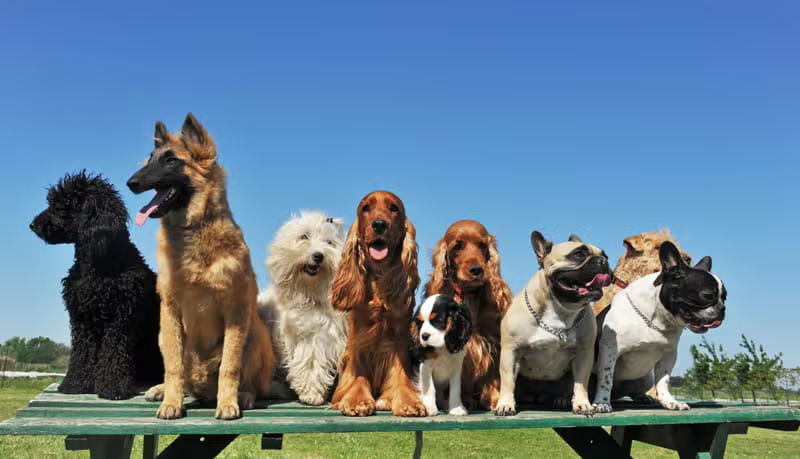
Dog Selection Guide
This guide helps visitors think like responsible owners before choosing a puppy, adult dog, family dog or trained dog. It does not make guaranteed suitability claims; it helps you ask better questions before sending an enquiry.
Apartment, compound, family home or working environment all influence space, noise tolerance, exercise options and management needs.
High-energy dogs need more structured activity, mental work and training consistency than low-exercise companion dogs.
First-time owners may need a calmer, easier-to-manage dog and professional guidance before choosing high-drive breeds.
Children, elderly relatives, visitors and other animals should be considered before choosing size, age and temperament.
Every dog needs training, but some dogs require more structure, handling skill and daily repetition than others.
Size affects housing, travel, feeding, handling strength, grooming, exercise and safety management.
Match the dog’s energy to your realistic daily routine, not the routine you hope to have later.
Think beyond appearance. Consider grooming, veterinary care, nutrition, exercise, training and lifelong responsibility.
Balanced Comparisons
The right dog depends on lifestyle, environment, handling ability, available time and the individual dog’s temperament. A breed guide can help, but the specific dog’s background and owner-provided information matter most.
Before making a decision, review the dog profile, ask about temperament and training level, and discuss realistic daily care needs directly with Mark Lambo.
Puppies need patience, potty training, socialization and daily structure. Adult dogs may have more visible temperament and training history, but still need adjustment and owner consistency.
Active dogs may suit experienced owners with time for exercise and training. Lower-exercise dogs may be better for calmer homes, but still need stimulation and care.
Large dogs require confident handling, space and management. Small dogs can still need serious training, socialization and boundaries.
Security-focused or high-drive dogs are not suitable for every home. Suitability should be discussed carefully and responsibly.
Send a simple message about your living environment, experience level, preferred size, activity level and goals. No name, email, checkout or account is required.